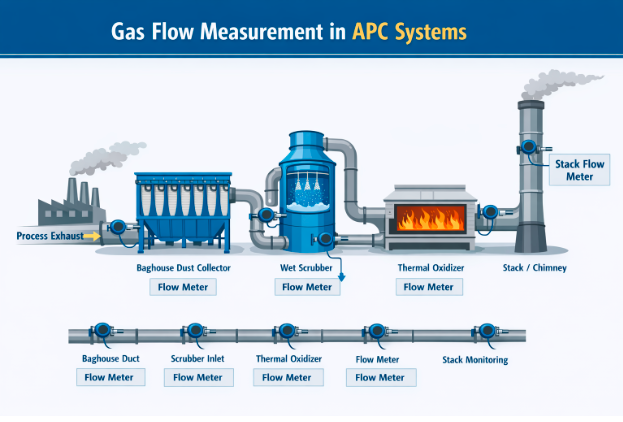
Insertion Thermal Mass Flow
Meter | German Technology
Engineered In India
Optimizing industrial processes with precision flow measurement
Optimizing industrial processes with precision flow measurement
High-precision Insertion & Inline Thermal Mass Flow Meters with dual controllers for real-time process monitoring.
Engineered process optimization solutions for high-demand sectors like Steel, Power, Cement, and Chemicals.
ISO-17025 certified German Wind Tunnel calibration, AMC contracts, and expert on-site technical support.
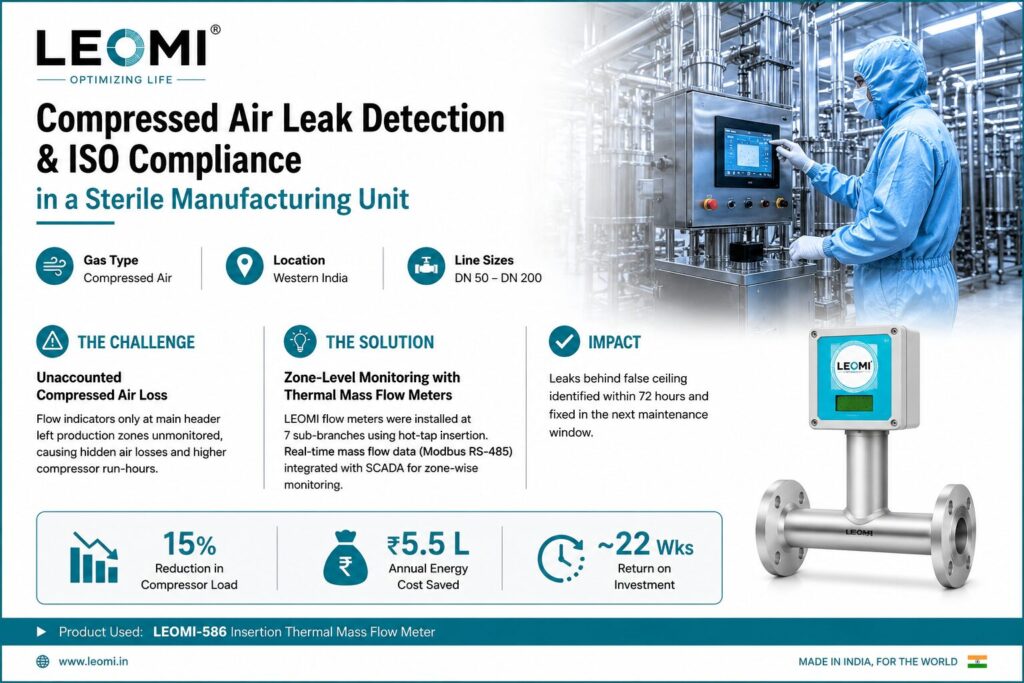
Reliable mass flow measurement for Compressed Air, Flue Gas, Biogas, Flare Gas, and Aeration Air.
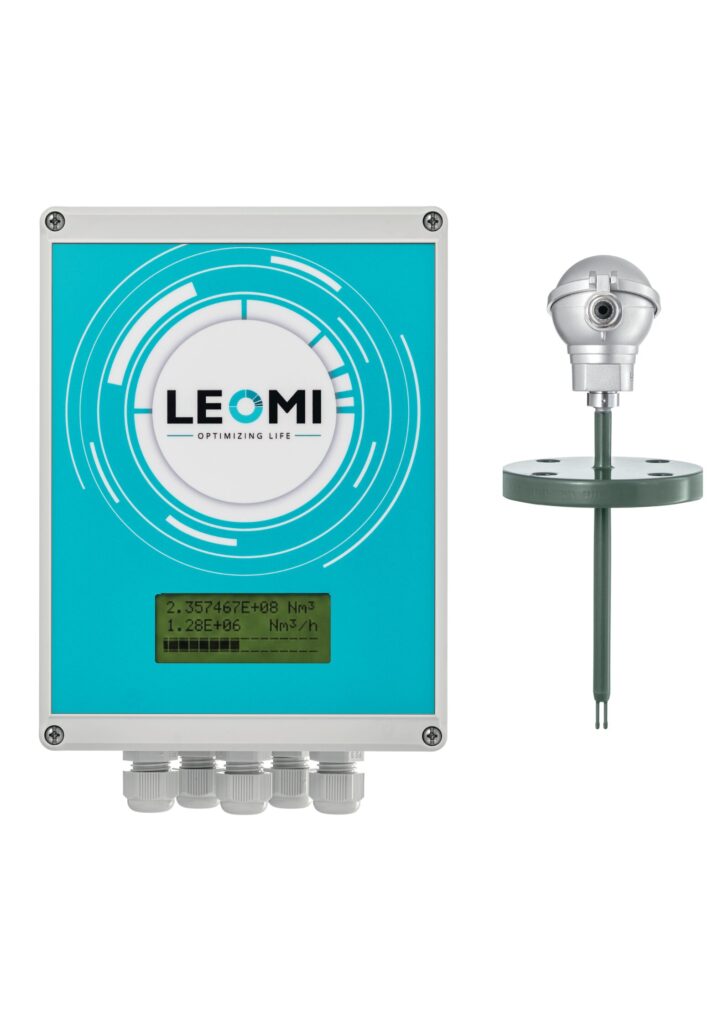
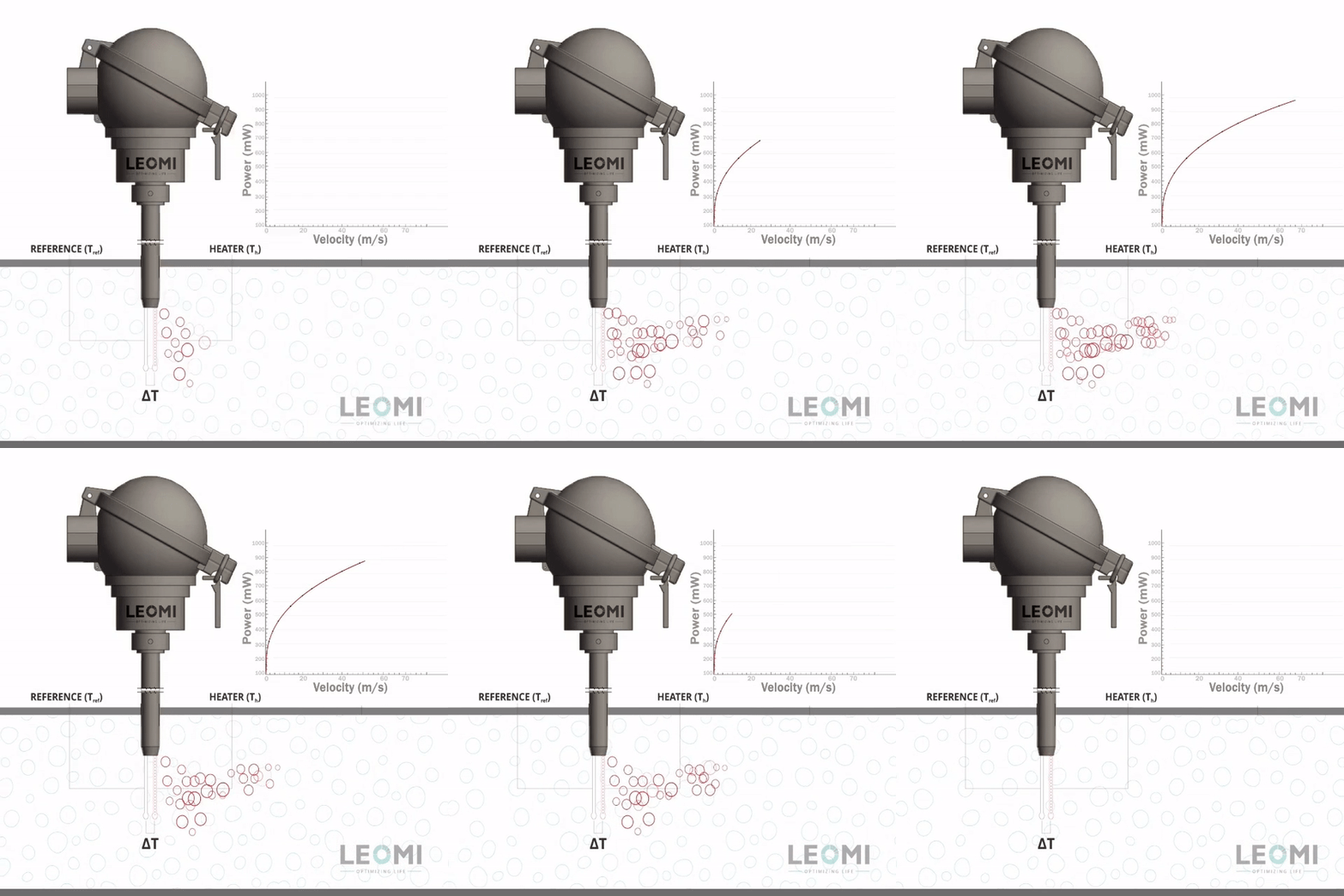
LEOMI Insertion Thermal Mass Flow Meters operate on the physical principle of thermal dispersion from a heated sensor element to the ambient flowing medium. The system utilizes two high-precision RTD Pt-100 sensors: a reference sensor (Tref) that monitors the actual medium temperature, and a heated sensor (Th) maintained at a constant differential over-temperature (ΔT).
Governed by King’s Law, the passing gas mass flow exerts a cooling effect on the heated sensor. The power required to maintain the constant temperature differential is directly proportional to the mass flow rate of the gas. Unlike conventional Wheatstone Bridge designs, LEOMI integrates a state-of-the-art hybrid analog controller for immediate response times and a digital controller for exceptional absolute accuracy and zero long-term drift.

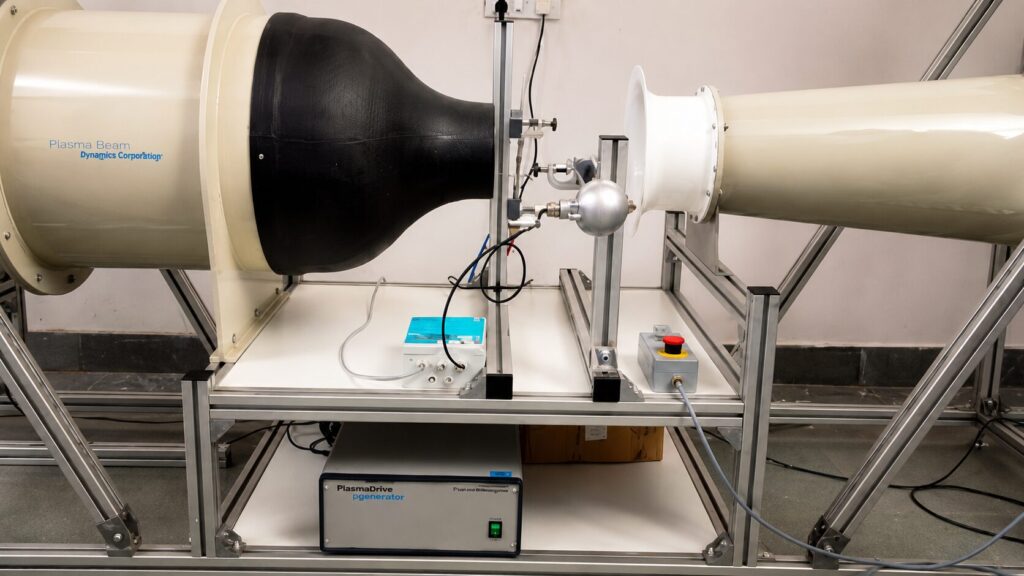
India’s first in-house latest state-of-the-art made in Germany fully automatic Göttinger calibration wind tunnel DKD certified as per ISO-17025.
DKD traceability for Air Velocity ranges 0.2 m/s to 75 m/s with flow uniformity of ±0.2%.


















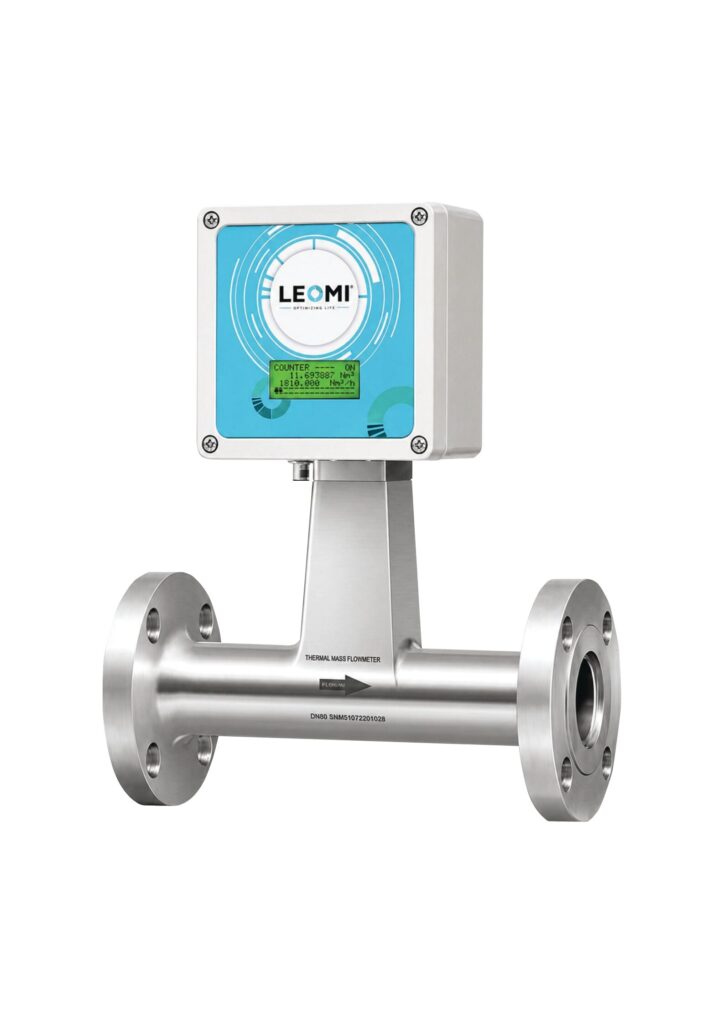
A Thermal Mass Flow Meter is an instrument used to measure the mass flow rate of gases
directly. It operates on the thermal dispersion principle, where one sensor is heated while
another measures the gas temperature. As gas flows over the heated sensor, it carries away
heat, and the amount of heat loss is proportional to the gas mass flow rate. Since it measures
mass flow directly, it does not require additional pressure or temperature compensation for most
applications.
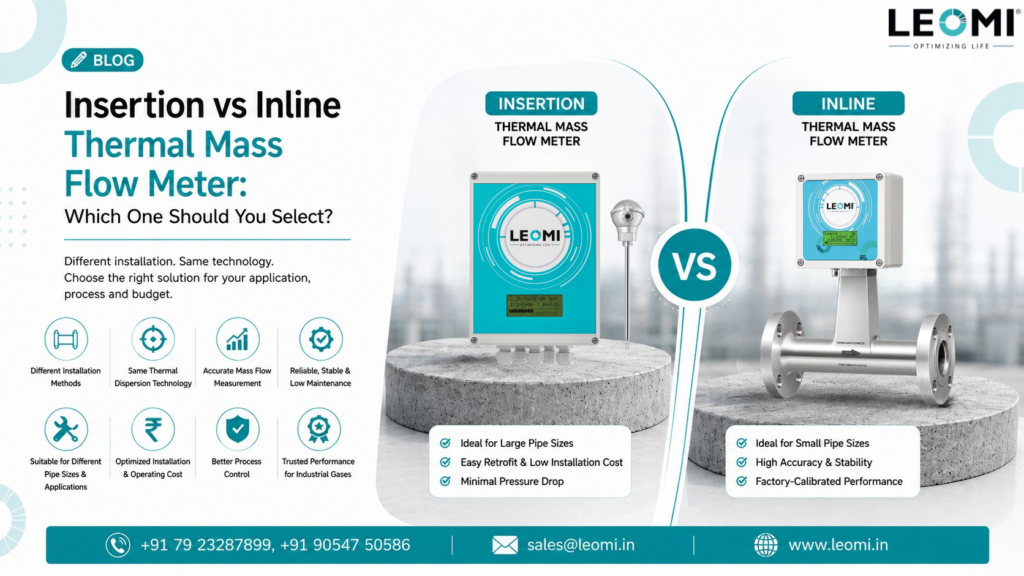
An Insertion Thermal Mass Flow Meter is designed for installation directly into pipelines or
large ducts through a mounting connection. It measures gas mass flow using thermal dispersion
technology without obstructing the flow. This design makes it suitable for large-diameter
pipelines where installing an inline meter may not be practical. An Insertion Thermal Mass
Flow Meter are widely used for compressed air, nitrogen, combustion air, and industrial gas
measurement applications.
Mass flow describes the actual quantity of gas passing through a system per unit time, such as
kg/h. Volumetric flow describes the space occupied by the gas, such as m³/h, and changes
with pressure and temperature.
Normal and standard volumetric units, such as Nm³/h and Sm³/h, convert the gas volume to
defined reference conditions. A thermal mass flow meter measures gas mass flow directly and
may display the result as mass flow or as standardized volumetric flow based on its calibration
and configuration.
A Thermal Mass Flow Meter can measure a wide range of clean and dry gases, provided the
meter is calibrated for the specific gas. Common applications include compressed air, nitrogen,
oxygen, natural gas, biogas, hydrogen, carbon dioxide, methane, argon, and helium. For
applications involving biogas, a dedicated Bio Gas Flow Meter may be selected based on the
gas composition and operating conditions.
The accuracy of a Thermal Mass Flow Meter depends on the manufacturer, calibration,
installation, and application conditions. Typically, these meters provide high measurement
accuracy with a wide turndown ratio, allowing reliable measurement across both low and high
flow rates using the same instrument. The actual performance should always be verified from
the manufacturer's calibration data and application review.
A thermal mass flow meter normally does not require separate external pressure and
temperature transmitters to calculate gas mass flow or standardized flow. The thermal sensor
responds to the gas mass passing the sensing element rather than only to the operating
volume.
Pressure and temperature are still required during instrument selection because they affect gas
properties, mechanical suitability and calibration limits. Significant changes in gas composition,
pressure, temperature or compressibility may require an application review, correction method
or an advanced compensated configuration.
Advantages
● Direct mass flow measurement.
● No separate pressure or temperature compensation in most applications.
● Wide turndown ratio.
● Low maintenance due to no moving parts.
● Suitable for many industrial gas applications.
Limitations
● Performance depends on proper calibration for the specific gas.
● Not suitable for liquids.
● Gas composition changes can affect measurement accuracy.
● Installation conditions, such as disturbed flow profiles, should be evaluated for optimum
performance.