In industrial operations, precise measurement of process air and gas flow is fundamental for efficiency and process control. While conventional flow meters provide volume readings, they often present an incomplete picture. Actual mass flow meters deliver the true state of your process conditions.
This distinction is not merely technical. It addresses hidden inefficiencies and compromised output that can affect energy consumption and overall operational integrity. Understanding actual mass flow is becoming a critical requirement for accurate industrial management.
The Limitations of Volume: Why Mass Measurement is Crucial.
Relying on volume readings for precise control of combustion processes or chemical reactions can be misleading. Gas and air densities vary significantly with changes in temperature and pressure. This means a consistent volume reading does not guarantee a consistent amount of material.
Consider this: A balloon filled with air contains the same mass of air regardless of its temperature, but its volume will expand or contract. Similarly, industrial processes demand knowledge of the exact mass of gas flowing, not simply the space it occupies at a given moment.
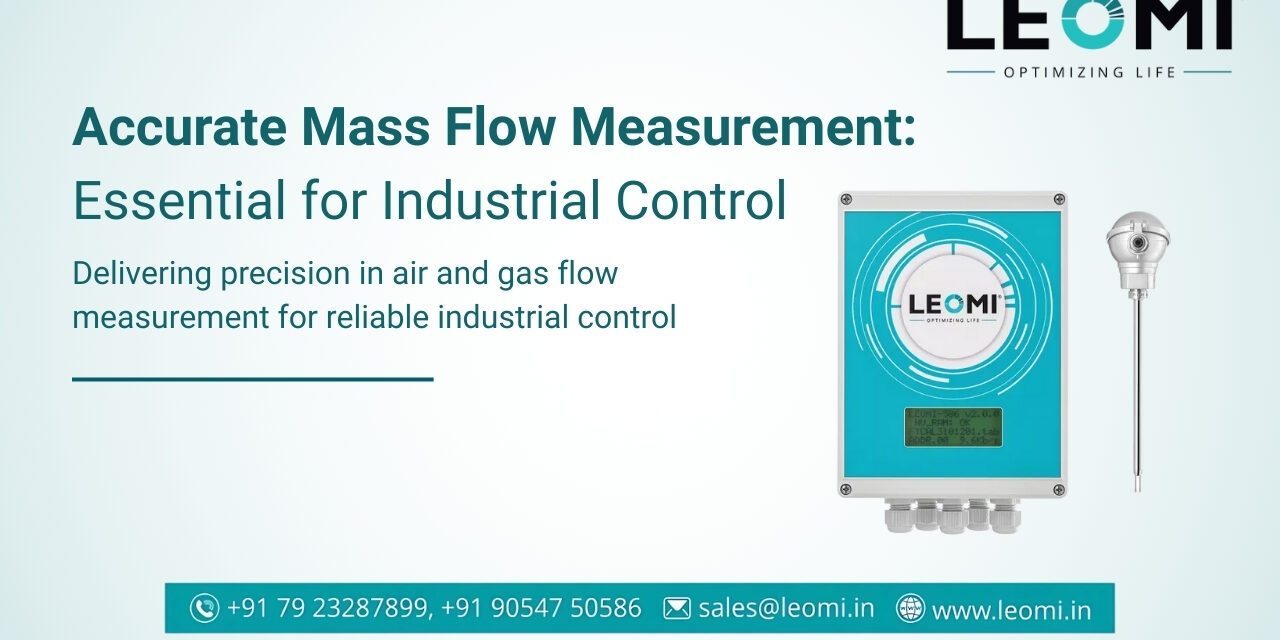
Actual mass flow meters resolve this ambiguity. They measure the true mass of gas or air directly. This capability is foundational for accurate control in critical applications such as combustion optimization, chemical synthesis, and air quality management.
Beyond Estimation: The Principle of Thermal Mass Flow.
Achieving precise accuracy in fluctuating industrial environments requires advanced methods. Thermal measurement principles enable this by directly quantifying the heat transfer carried away by the flowing gas. As gas flow increases, more heat is dissipated, and this relationship is precisely converted into a reliable mass flow reading.
This technology offers significant advantages:
Direct Mass Measurement: Provides actual mass flow directly, eliminating the need for separate pressure and temperature compensation, simplifying system setup and enhancing accuracy.
Broad Compatibility: Performs consistently across a wide range of industrial gases.
High Repeatability: Ensures consistent and trustworthy measurements over time, supporting process stability.
This technology allows engineers to transition from estimations to exact, actionable data.
Applications Demanding Precision: Industry-Wide Impact.
Industries requiring rigorous control are leveraging actual mass flow data to enhance operational performance:
Power Plants: Precise air-to-fuel ratios lead to optimized combustion, reduced emissions, and adherence to environmental regulations. This contributes to both cost efficiency and sustainable operations.
Steel Manufacturing: Monitoring combustion air and process gases accurately helps to optimize heating processes and maintain consistent product quality.
Chemical Plants: Accurate mass flow control is essential for managing reaction conditions where gas ratios directly impact product outcomes and safety.
Pharmaceuticals, Cement, Textiles: These sectors benefit from absolute consistency and batch-to-batch repeatability in their processes, enabled by accurate gas flow measurement.
In each application, accurate mass flow enables improved product quality, minimized waste, and enhanced operational profitability.
The Importance of Professional-Grade Solutions.
In critical industrial applications, the quality of instrumentation directly correlates with operational reliability. Professional-grade instruments are designed with advanced sensor technology and robust electronics to deliver dependable performance in demanding environments.
Key characteristics of leading solutions include:
Robust Construction: Built to withstand harsh industrial conditions and ensure long-term, consistent performance.
Seamless Integration: Offering standard analog and digital outputs (e.g., Modbus, 4-20 mA) for straightforward compatibility with existing SCADA or PLC systems.
Certified Calibration Accuracy: Reputable manufacturers utilize advanced calibration facilities, including wind tunnel technology, to guarantee measurement accuracy across the full operating range.
Investing in high-quality instruments is critical for maintaining process control and avoiding costly operational disruptions.
Selecting the Right Solution for Your Application.
Optimizing operations begins with choosing the appropriate measurement solution. The selection of an actual mass flow meter should align with your specific process requirements:
Insertion-type meters are suitable for large ducts and pipelines.
In-line meters are designed for smaller applications.
Beyond the hardware, partnering with an experienced manufacturer is crucial. For Indian industries, local expertise and comprehensive support throughout the meter’s operational life are invaluable. This partnership ensures that advanced technology is complemented by:
Precise calibration services.
Effective integration support.
Consistent technical assistance.
This strategic decision transforms a capital expenditure into a long-term asset for efficiency and profitability.
Conclusion: Quantify to Optimize.
For industrial leaders, the ability to accurately quantify and control gas and air flow is no longer optional. It is a foundational element for achieving competitive advantage. Implementing an actual mass flow meter delivers:
Clear Diagnostic Data
Precise Leak Detection
Optimized Resource Allocation
Extended Equipment Lifespan
Compliance-Ready Records for Audits
Facilities that adopt this advanced measurement capability are not just reducing waste; they are enhancing their operational effectiveness.
Ready to elevate your industrial processes? Explore professional-grade flow measurement solutions designed for demanding Indian industrial environments. Visit leomi.in to learn more.