Compressed air is often referred to as the fourth utility in manufacturing, but it is also one of the most expensive. In many industrial facilities, compressed air systems account for a significant share of total electricity consumption. Despite this, many plants still rely on estimated air consumption rather than actual flow data during energy audits.
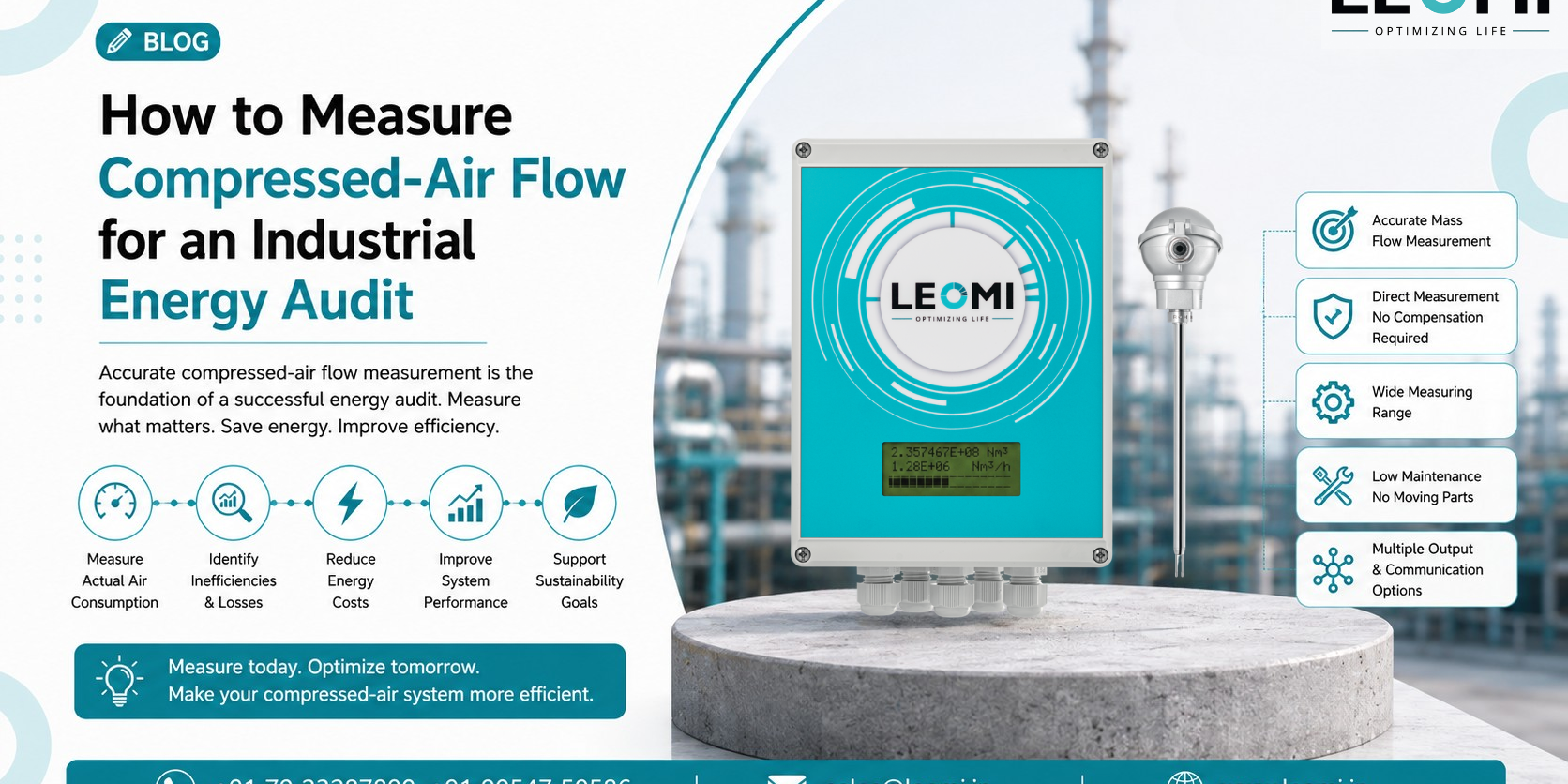
Measuring compressed-air flow is essential for understanding how efficiently the system operates and identifying opportunities to reduce energy costs. Installing a Compressed Air Flow Meter provides accurate consumption data, helping maintenance and energy teams make informed decisions. For industries seeking reliable monitoring solutions, choosing the right Compressed Air Flow Meter in India is an important step toward improving operational efficiency.
Why Compressed-Air Flow Measurement Matters
An industrial energy audit is designed to identify where energy is consumed and where improvements can be made. Since compressed air is generated using electrically driven compressors, even small inefficiencies can lead to high operating costs over time.
Without measuring flow, it becomes difficult to answer important questions such as:
- How much compressed air is actually being used?
- Are compressors operating efficiently?
- Is air consumption increasing without a rise in production?
- Are leaks affecting system performance?
Flow measurement converts assumptions into measurable data, making the energy audit more accurate and actionable.
Where Should Compressed-Air Flow Be Measured?
The location of the Compressed Air Flow Meter determines the type of information that can be collected.
Compressor Outlet
Installing the meter at the compressor discharge helps monitor the total air produced by each compressor. This information is useful for evaluating compressor loading, comparing machine performance, and identifying inefficient operation.
Main Distribution Header
Measuring flow in the main distribution pipeline provides an overall picture of plant-wide compressed-air consumption. It helps identify fluctuations in demand and establishes a baseline for future energy-saving projects.
Individual Production Areas
Installing flow meters on dedicated production lines or departments allows engineers to compare compressed-air consumption across different processes. This approach helps identify equipment or production areas consuming more air than expected.
Parameters That Should Be Monitored Along with Flow
A successful energy audit requires more than flow measurement alone. Several operating parameters should also be recorded to better understand system performance.
These include:
- Operating pressure
- Air temperature
- Compressor running hours
- Production output
- Shift schedules
- Compressor loading conditions
Combining these values with flow data helps determine whether energy consumption is directly related to production or if unnecessary losses are occurring.
Selecting the Right Compressed Air Flow Meter
Not all flow meters are suitable for compressed-air applications. Selecting the right instrument depends on several technical factors.
When choosing a Compressed Air Flow Meter, consider:
- Pipe diameter
- Maximum and minimum flow rate
- Installation type (Insertion or Inline)
- Operating pressure
- Communication options such as Modbus or 4–20 mA
- Calibration quality
- Long-term maintenance requirements
Thermal mass flow technology is widely used because it directly measures mass flow and offers excellent performance across a wide operating range.
Common Issues Identified During Energy Audits
Accurate flow measurement often reveals problems that cannot be detected through visual inspection alone.
Some of the most common findings include:
Air Leakage
Leaks are one of the largest sources of energy loss in compressed-air systems. Continuous flow monitoring helps identify unexpected air consumption during non-production hours.
Compressor Oversizing
Many facilities operate compressors that are significantly larger than actual demand. This reduces efficiency and increases electricity consumption.
Pressure Drops
Excessive pressure losses across filters, dryers, or pipelines force compressors to work harder, increasing operating costs.
Uneven Air Demand
Monitoring different production lines helps identify departments consuming more compressed air than necessary, allowing process optimization.
Benefits of Continuous Compressed-Air Monitoring
Rather than performing one-time measurements, many industries now install permanent monitoring systems.
Continuous monitoring offers several advantages:
- Real-time air consumption data
- Early leak detection
- Better compressor control
- Improved preventive maintenance
- Historical performance trends
- Support for energy management programs
A permanently installed Compressed Air Flow Meter in India helps industries monitor system performance throughout the year instead of relying only on periodic audits.
Best Practices for Accurate Measurement
To achieve reliable results, proper installation and maintenance are equally important.
Follow these best practices:
- Install the flow meter in a location with adequate straight pipe length.
- Ensure the sensor is positioned correctly inside the pipeline.
- Avoid installation immediately after bends, valves, or reducers.
- Verify calibration at recommended intervals.
- Review flow trends regularly instead of relying on occasional measurements.
- Integrate flow data with the plant’s SCADA or PLC system for continuous monitoring.
These practices improve measurement reliability and help maintain consistent performance over time.
Conclusion
Measuring compressed-air flow is one of the most effective ways to improve the quality of an industrial energy audit. Accurate flow data enables industries to identify leaks, optimize compressor performance, reduce energy waste, and make informed operational decisions. A properly selected Compressed Air Flow Meter not only supports energy-saving initiatives but also contributes to long-term process efficiency.
If you’re looking for a dependable Compressed Air Flow Meter in India, Leomi Instruments offers advanced insertion thermal mass flow meter designed for industrial compressed-air systems. With reliable performance, accurate measurement, and expert application support, Leomi helps industries optimize compressed-air usage, lower energy costs, and improve overall plant efficiency.